
https://www.aexcept.com/the-ultimate-guide-to-surfing-exploring-waves-techniques-safety-global-hotspots/
On the vast ocean and wide lake surface, windsurfing is like a lively bird, attracting countless souls who love freedom and challenge with its unique charm. It combines the excitement of surfing with the elegance of sailing, allowing participants to feel the power of nature and release their inner desire for freedom amidst the sea breeze and waves.
Windsurfing: A Wonderful Journey Through the Wind and Waves
Stepping on the windsurfing board, you embark on a fantastic adventure dancing with the sea breeze and waves. When you stand on the board, holding a sail, the sea breeze gently brushes your cheeks, carrying the unique scent of the sea. As the wind changes, you cleverly adjust the angle of the sail, allowing the sailboard to glide rapidly on the water surface, sometimes smoothly moving forward, and sometimes soaring into the air with the power of the waves. The feeling of freely shuttling on the water surface seems to merge with the sea. Every collision with the waves splashes crystal clear water droplets, and every successful change in direction by controlling the sea breeze brings a sense of accomplishment. On windsurfing, you can enjoy the vast and boundless sea surface, feel the vastness of the sky and sea, which is the unique romance and excitement of windsurfing.
Comprehensive improvement of body and mind
Comprehensive exercise of bodily functions
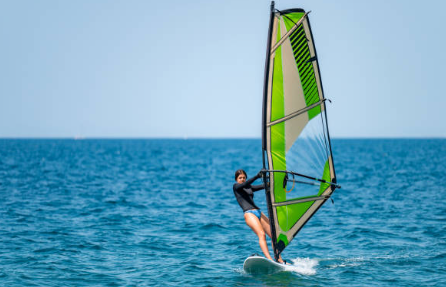
Windsurfing is a comprehensive exercise for the body. When controlling the sailboard, strong upper limb strength is required to adjust the angle and direction of the sail. Long term operation can fully exercise the muscles of the arms, shoulders, and back, making them stronger and more powerful. At the same time, in order to maintain balance on the undulating waves, the core muscle group needs to continuously exert force, which not only enhances the strength of the abdomen and waist, but also significantly improves the body’s sense of balance and coordination. Legs should not be idle, they should stand steadily on the windsurfing board, resist the impact of waves, and thus exercise the stability and endurance of leg muscles. In addition, windsurfing requires rapid response to changes in sea breeze and waves, which greatly tests the body’s reaction speed and flexibility. Long term participation in windsurfing can comprehensively improve the functions of various parts of the body, making it more agile and strong.
Positive shaping of psychological state
Windsurfing is also a spiritual practice. On the sea, facing the ever-changing sea breeze and waves, you need to remain calm and focused, constantly pay attention to changes in the surrounding environment, and make correct judgments and decisions. This helps cultivate strong focus and adaptability. When you successfully navigate the waves and overcome numerous difficulties, your confidence will be greatly enhanced. Windsurfing can also teach you to respect nature and the power of the ocean. Through interaction with nature, your heart becomes more peaceful and resilient, helping you better cope with various challenges in life.
Adequate preparation before windsurfing
Equipment selection
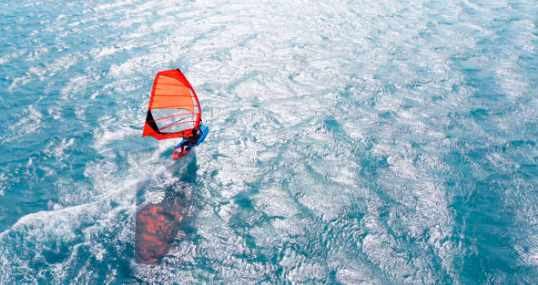
Appropriate windsurfing equipment is the foundation for safety and enjoyment of sports. Windboard is mainly composed of a board body, mast, sail, and control system. The selection of the board should be based on an individual’s weight, skill level, and usage scenario. Novices can choose larger and more stable boards for easy balance control; Experienced players can try smaller and more flexible boards to pursue higher speed and more complex skills. The combination of mast and sail is also crucial, as different wind conditions require sails of different sizes and shapes. The control system includes foot ropes, control handles, etc., ensuring smooth, safe, and reliable operation. In addition, life jackets are essential equipment that can ensure your life safety in the event of an accident.
Skill learning
Before officially embarking on windsurfing, it is crucial to systematically learn windsurfing skills. You can participate in professional windsurfing training courses and learn basic windsurfing skills under the guidance of a coach, such as how to board up and down, how to sail, how to adjust the angle of the sail, how to turn, etc. At the same time, it is essential to have knowledge of marine meteorology and learn to judge changes in sea winds and waves, which is crucial for safe and smooth sailing. We also need to learn about water safety knowledge, including how to deal with emergencies and how to perform self rescue. Through professional training and practical exercises, master these skills and lay a solid foundation for windsurfing.
physical training
Windsurfing requires a certain level of physical fitness, and early physical training can make it easier for you to exercise. Aerobic exercise such as swimming, running, etc. can be performed to enhance cardiovascular function and improve endurance. Strength training should not be ignored, with a focus on strengthening the upper limbs, core, and legs, such as doing push ups, sit ups, squats, and other exercises. In addition, exercises such as yoga and Pilates can enhance the flexibility and balance of the body, which is very helpful for maintaining stability on windsurfing.
Practical skills in windsurfing
Techniques for adjusting sails
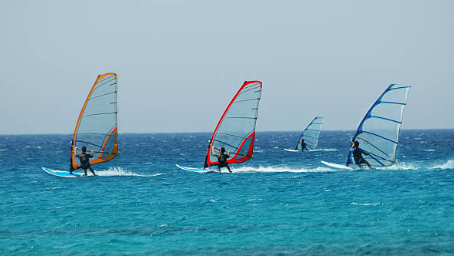
Adjusting the sail is one of the key techniques in windsurfing. Under different wind conditions, it is necessary to adjust the angle and shape of the sail to obtain optimal power. When the wind is weak, adjust the sail to an angle close to perpendicular to the wind direction to increase the force area of the sail and obtain greater power; When the wind is strong, reduce the angle between the sail and the wind direction appropriately to avoid the sail losing control due to excessive force. At the same time, the angle of the sail should be flexibly adjusted according to the undulations of the waves and the inclination of the board to maintain the balance of the board.
Turning skills
Turning is a commonly used technique in windsurfing. When turning, it is achieved by changing the angle of the sail and the center of gravity of the body. For example, when turning to the left, pull the sail forward to the left, and at the same time, move the center of gravity to the left, and the board will turn to the left accordingly. When turning, pay attention to controlling the speed to avoid difficulty in turning or losing control of the board due to excessive speed. At the same time, it is important to observe the surrounding environment in advance to ensure safe turning.
Wave technique
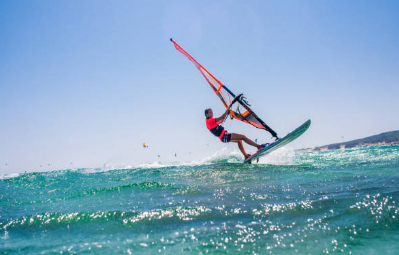
Mastering wave skills can help you better enjoy windsurfing in the presence of waves. When encountering waves, one should use the power of the waves to increase speed and make exciting movements. For example, when the waves are about to surge, adjust the angle of the sail and use the rising force of the waves to accelerate the sailboard to the top of the waves; On the crest of the waves, one can make turns, jumps, and other movements by adjusting the posture of the sail and body. But be careful to control the rhythm with the waves and avoid being knocked over by them.
Safety points for windsurfing
safety protection
Windsurfing is conducted on water and carries certain risks, so safety protection is crucial. Before each windsurfing activity, it is essential to check the safety of the equipment to ensure that the board, mast, sail, and control system are intact and undamaged. Wearing a fitted life jacket is the last line of defense to ensure life safety. At the same time, it is important to understand one’s physical condition and avoid engaging in windsurfing activities when feeling unwell or fatigued.
Environmental Assessment
Before engaging in windsurfing, a comprehensive assessment of the environment is necessary. Understand the situation of the sea or water area, including water depth, water flow, seabed topography, etc. Pay attention to weather forecasts, especially wind and wave forecasts, and avoid windsurfing in adverse weather conditions. If the wind is too strong, the waves are too high, or there are extreme weather conditions such as thunderstorms, the trip should be cancelled decisively.
Companions and Communication
Try not to go windsurfing alone, it’s better to travel with companions. In this way, we can take care of each other and provide assistance in case of emergencies. At the same time, carry necessary communication equipment such as waterproof mobile phones or walkie talkies so that you can seek help in a timely manner when needed.
Windsurfing is a free gallop on the sea breeze and waves, which allows us to challenge ourselves, appreciate the charm of nature, and gain physical and mental growth. As long as you are well prepared, master the correct skills, and follow safety guidelines, you can fully enjoy freedom and excitement in the world of windsurfing, and embark on an unforgettable water adventure.
https://www.aexcept.com/the-ultimate-guide-to-surfing-exploring-waves-techniques-safety-global-hotspots/