https://www.aexcept.com/the-ultimate-guide-to-surfing-exploring-waves-techniques-safety-global-hotspots/
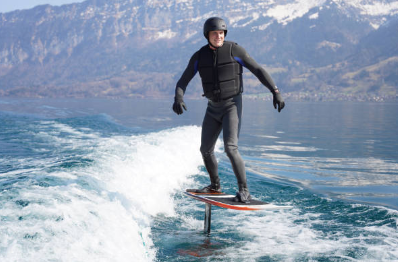
In recent years, surfing has undergone a revolutionary upgrade—hydrofoil surfing. This gameplay that combines high technology and extreme sports allows surfers to “fly” on the water surface like flying machines, completely breaking the boundaries of traditional surfing. This article will take you to a deeper understanding of the charm and secrets of hydrofoil surfing.
1. What is hydrofoil surfing?
Hydrofoil surfing achieves a “suspended” effect by installing a hydrofoil at the bottom of the surfboard. The hydrofoil is made of metal material and has a structure similar to an airplane wing. By generating lift in the water, it lifts the surfboard off the surface of the water, reducing direct contact with the water and significantly reducing drag. This design allows surfers to glide in smaller waves or even in no-wave environments, experiencing a sense of lightness like flying.
2. The working principle of hydrofoil surfing
The core principle of hydrofoil is to utilize fluid mechanics:
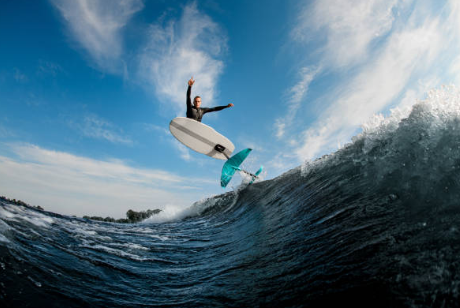
1. Lift generation: The curved upper surface and flat lower surface of the hydrofoil create a pressure difference. When the surfboard moves in the water, the high pressure below the hydrofoil “lifts” the board out of the water surface.
2. Center of gravity control: The rider adjusts the angle of the hydrofoil by transferring the weight of the front and rear feet (i.e., the “kicking” action). When the hind foot applies force, the hydrofoil rises to increase lift; when the front foot applies force, the hydrofoil dives and controls the pitch posture of the board.
3. Balance technique: The rider needs to maintain a squat position, placing one foot above the mast (mast) that connects the hydrofoil and surfboard, and adjusting the center of gravity of the body to maintain balance, similar to the feel of piloting an airplane.
3. Equipment and types of hydrofoil surfing
Core equipment:
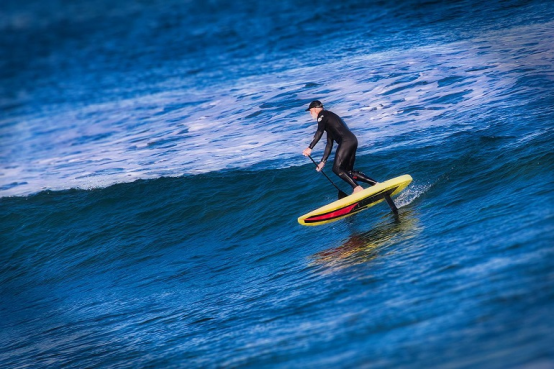
Hydrofoil components: including mast, fuselage, front wing, and stabilizer. The front wing provides the main lift, while the stabilizing wing maintains balance.
Surfboard: It needs to be adapted to the installation of hydrofoils and is usually shorter and lighter than traditional surfboards.
Main types:
Wind Forming: Combining sails and hydrofoils, gliding on the water surface with handheld inflatable wings, emphasizing navigation and speed.
Kite Foiling: With the help of a kite, it can fly at high speed on the water surface, suitable for players who pursue excitement.
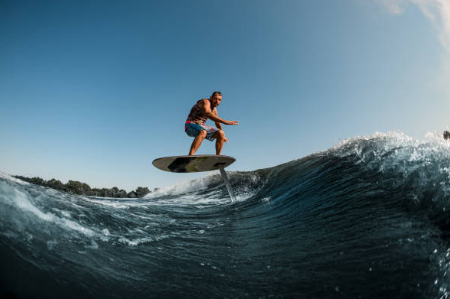
Wake Forming: Dragged by a motorboat, gliding in the wake of a wave, with high-speed requirements (8-10 miles per hour or above).
Surf Forming: closest to traditional surfing, utilizing natural surges to achieve long-distance gliding in smaller waves.
4. The unique charm of hydrofoil surfing
1. Breaking through the limitations of wave conditions: No need to wait for big waves; small waves can even glide in calm environments, greatly extending surfing time.
2. Low resistance and efficient gliding: The hydrofoil reduces water resistance by more than 90%, allowing riders to glide farther distances with less physical exertion and even easily break the single riding record of 300-400 yards.
3. New control experience: By controlling the posture of the board through the center of gravity of the body, it brings a sense of freedom similar to flying, opening up a new technological challenge for surfing enthusiasts.
5. Security and Challenges
Although hydrofoil surfing is full of charm, beginners need to pay attention to:
Technical threshold: It is necessary to master the skills of center of gravity control. It is recommended to start practicing in calm waters or small water areas.
Equipment risk: The metal blades of the hydrofoil have sharp edges, so caution should be taken to avoid collisions. Wearing protective gear (such as impact vests) can reduce the risk of injury.
conclusion
Hydrofoil surfing is not only an innovation in surfing techniques but also a redefinition of the limits of sports. It allows surfers to break free from the constraints of waves and write a new chapter of freedom and speed on the surface of the water. Whether you’re an extreme gamer seeking excitement or a surfing enthusiast eager to explore new territories, hydrofoil surfing is worth a try—after all, who wouldn’t want to experience the thrill of “flying” on the surface of the water?
https://www.aexcept.com/the-ultimate-guide-to-surfing-exploring-waves-techniques-safety-global-hotspots/