https://www.aexcept.com/mastering-the-art-of-skateboarding-from-foundational-actions-to-advanced-street-safety/
In the streets and alleys of the city, skateboarding is like a gust of free wind, weaving through it and attracting the attention of everyone. It is not just a wooden board with four wheels, but also a unique way of expressing oneself and pursuing freedom. It is an indispensable part of street culture, captivating countless young people who love adventure and individuality.
Skateboarding: Enjoy the freedom of movement on the streets
Skateboarding is an intimate dance with the streets. The moment you step onto the skateboard, you seem to blend in with it, becoming a unique scenery on the street. With a gentle kick, you can glide rapidly on flat roads, feel the gentle breeze brushing your face, and enjoy the pleasure brought by speed. Whether wandering freely in an open square or bravely rushing down a slope on the street, every slide is a pursuit of freedom. You can cleverly navigate around pedestrians and obstacles on the road, interpreting your style with unique sliding trajectories. When you successfully complete a high difficulty move, such as a beautiful ollie or a smooth kicklip, the sense of achievement is unparalleled, as if the whole world is cheering for you. This is the unique charm of skateboarding.
Unique growth of body and mind
Multidimensional exercise of physical functions
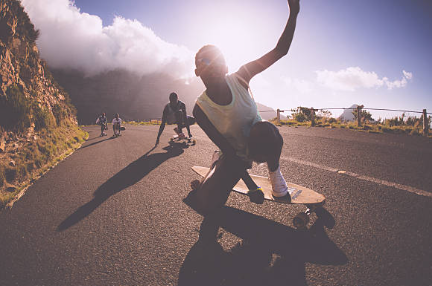
Skateboarding provides comprehensive and unique exercise for the body. During the sliding process, it is necessary to constantly adjust the center of gravity of the body, which has a significant effect on improving balance. The subtle movements of the feet on the skateboard can accurately control the direction and speed of the skateboard, thereby exercising the muscle strength and coordination of the legs. Every jump, turn, and landing requires stable force from the core muscle group, which strengthens the muscles in the abdomen and waist, making the body more stable. At the same time, in order to maintain balance and complete various movements, the arms also unconsciously cooperate with swinging, which also exercises the strength and flexibility of the upper limbs. Long term adherence to skateboarding will greatly improve your body’s flexibility and reaction speed, making you more agile and comfortable in daily life.
Deep shaping of psychological qualities
Skateboarding is also a spiritual adventure. When you first start skateboarding, frequent falls and failures are commonplace, which requires strong perseverance and patience. Every time I get up from a fall and step back on the skateboard, it’s a challenge to myself. When you keep trying and successfully complete an action that you once thought was out of reach, your confidence will be greatly enhanced. Skateboarding also cultivates your creativity, allowing you to fully unleash your imagination and showcase your unique personality while constantly exploring new actions and gameplay. This spirit of daring to try and innovate will accompany you in facing various difficulties in life, allowing you to move forward bravely even in the face of setbacks.
Careful preparation before skateboarding
Carefully selected equipment
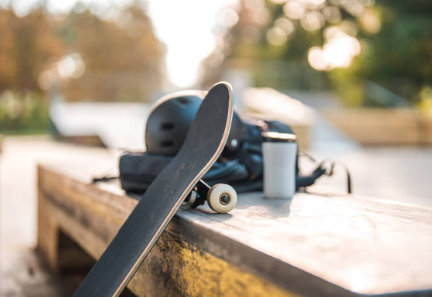
A suitable skateboard is the foundation for embarking on a skateboarding journey. Skateboards are mainly composed of a board surface, a bracket, wheels, and bearings. The material, shape, and size of the board surface vary, and should be chosen according to one’s own foot shape, sliding style, and personal preferences. For example, beginners can choose a slightly wider board surface, which makes it easier to maintain balance; And skilled skaters may choose narrower surfaces for more flexible movements. The bracket should have good stability and steering performance, while the hardness and size of the wheels will affect the speed and comfort of sliding. In addition, to ensure safety, helmets, knee pads, wrist guards, and other protective gear are essential as they can effectively protect your body in the event of a fall.
Basic skills learning
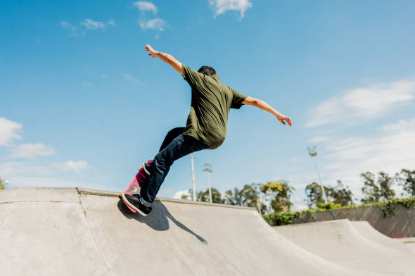
Learning basic skills is crucial before officially embarking on skateboarding. Firstly, one must learn how to stand correctly on a skateboard and maintain body balance, which is the foundation of all skateboarding movements. Then there is a simple slide, mastering how to push the skateboard forward with pedals and how to control the direction of the skateboard. Braking is also a necessary skill. Learning to rub your feet on the ground or use skateboard techniques to brake can ensure safety during the sliding process. At the same time, it is important to understand the basic structure and maintenance knowledge of skateboards in order to better maintain them and extend their service life.
Targeted physical training
Although skateboarding does not require strong physical fitness like some high-intensity sports, good physical fitness can make it easier for you to skate. You can engage in some aerobic exercise, such as jogging, to enhance cardiovascular function and improve endurance. Core strength training is also crucial, as it enhances the strength of the abdomen and waist through movements such as plank support and supine leg lifting, which helps maintain balance on the skateboard. In addition, some balance training can be done, such as standing on one foot, walking on a balance beam, etc., to make you more stable on the skateboard.
Practical Techniques in Skateboarding
Sliding skills
Sliding is a basic skill of skateboarding, and it is important to master the rhythm and speed of sliding. Use one foot to step on the ground and place the other foot on the skateboard to maintain balance. The force of kicking should be moderate to avoid excessive force that may cause the skateboard to lose control. During the sliding process, the direction is controlled by transferring the center of gravity of both feet on the skateboard, tilting the body slightly towards the turning direction while gently turning the skateboard with the feet. Always pay attention to the road conditions and avoid sliding on bumpy or gravel roads to prevent falling.
Turning skills
Turning is a commonly used technique in skateboarding, and there are multiple ways to achieve it. The simplest way is to turn by shifting the center of gravity of the body, moving the center of gravity to one side, and the skateboard will turn in that direction. You can also utilize the steering characteristics of skateboards to turn by twisting the bracket. When turning, pay attention to speed control, as excessive speed may cause difficulty turning or falling. At the same time, it is necessary to observe the turning route in advance to ensure safety.
Jumping technique
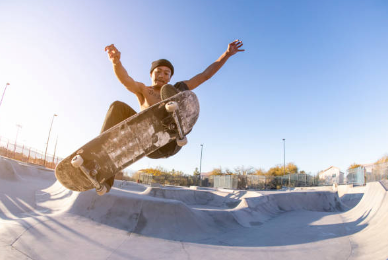
Jumping is a challenging technique in skateboarding, such as Ollie. When doing ollie, first place the front foot near the board head and the back foot at the board tail, with the knees slightly bent. Then press the back foot firmly on the tail of the board, causing it to bounce back on the ground, while the front foot quickly pulls up, driving the skateboard to jump up. To maintain body balance in the air, bend your knees when landing to cushion the impact force. Jumping skills require repeated practice, mastering timing and strength.
Safety Guide for Skateboards
safety protection
Skateboarding is a sport with certain risks, and safety protection is crucial. Before each skateboard ride, it is essential to wear protective gear such as helmets, knee pads, and wrist guards, which can effectively reduce the risk of injury in the event of a fall. Helmets can protect the head from impact, while knee and wrist pads can protect the joints and wrists. At the same time, it is necessary to check the condition of the skateboard to ensure that the board surface, brackets, wheels, and other components are not damaged, in order to avoid malfunctions during the sliding process.
selection of the site
Choosing a suitable skateboarding venue is also important. Try to choose a flat, open, and obstacle free venue, such as a skateboard park, square, etc. Avoid skateboarding on busy streets, steep slopes, or waterlogged roads, as these areas are prone to danger. If skateboarding in public places, follow the rules of the venue and do not disturb others.
self-protection awareness
During the skateboarding process, it is important to maintain a sense of self-protection at all times. Do not attempt actions beyond your ability, gradually improve your skills. If you feel unwell or in poor condition, you should immediately stop skateboarding. At the same time, it is important to learn the correct falling posture and try to land on the side of the body when falling, avoiding direct impact of the head and joints on the ground.
Skateboarding is a dynamic and passionate sport that allows us to freely ride in the city and showcase our individuality. As long as you are well prepared, master the correct skills, and pay attention to safety, you can fully enjoy the joy of free skating in the world of skateboarding and embark on your own exciting adventure.
https://www.aexcept.com/mastering-the-art-of-skateboarding-from-foundational-actions-to-advanced-street-safety/