https://www.aexcept.com/mastering-the-art-of-skateboarding-from-foundational-actions-to-advanced-street-safety/
Skateboarding attracts many enthusiasts with its unique charm. In the streets, alleys, and skateboard parks, you can always see skaters shuttling and jumping freely. However, skateboarding carries certain risks, and mastering safety protection techniques is necessary to enjoy the excitement while maximizing one’s own safety.
Essential protective equipment: Building a safety defense line
Helmet: a sturdy shield for the head
Helmets are considered the most important protective equipment in skateboarding, effectively protecting the head from serious injuries. When choosing a helmet, it is important to ensure that it meets safety standards such as GB 24429 in China and ASTM F1492 in the United States. High quality helmets usually use high-strength shells, such as ABS plastic, and are equipped with energy absorbing and buffering layers inside, which can absorb and disperse impact forces during collisions. Size adaptation is crucial, the helmet should fit tightly to the head, not too loose to cause shaking, nor too tight to create a sense of compression. Adjust the strap of the helmet to maintain a finger wide gap at the chin, ensuring stable wearing without affecting breathing. When wearing, the front edge of the helmet should be located 1-2 centimeters above the eyebrows to ensure comprehensive coverage of key areas of the head.
Knee and elbow pads: intimate protection for joints
During skateboarding, knees and elbows are highly susceptible to injury from falls. Knee and elbow pads can provide necessary protection for these joints. In terms of material, priority
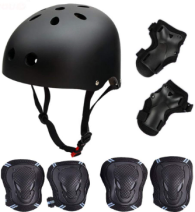
should be given to selecting materials with good elasticity and wear resistance, such as a mixture of silicone and nylon. The silicone part fits the joint, providing cushioning protection, and the nylon material enhances durability. The cushioning pads inside the knee and elbow pads should be thick and evenly distributed, which can effectively reduce the impact force when falling. When wearing, make sure the center of the protective gear is aligned with the joint, and adjust it to the appropriate tightness through Velcro or straps, which will neither slip nor hinder normal joint movement.
Wrist guard: a solid guarantee for the wrist
Wearing wrist protection can reduce the risk of wrist sprains and fractures as the wrist bears significant pressure when landing or supporting the body on a skateboard. Wristbands are usually made of elastic fabric with support bars inside to enhance the support for the wrist. When choosing, pay attention to the moderate elasticity of the wrist guard. If it is too tight, it will affect blood circulation, and if it is too loose, it will not have a protective effect. When wearing, cover the wrist joint with the wrist guard and adjust the position to ensure that the wrist is fully protected during movement, while not hindering the flexible operation of the skateboard by the hands.
Preventive measures: Reduce the risk of injury
Adequate warm-up: preparing for exercise
A 10-15 minute warm-up activity is essential before boarding a skateboard. First, perform full body joint movements, such as rotating the wrist and ankle, and moving the knee and hip joints. Slowly rotate each joint 10-15 times to increase joint flexibility. Continue with simple aerobic exercises such as open and close jumps, standing high and lifting legs for 3-5 minutes to increase heart rate and slightly warm up the body, preparing for the upcoming skateboarding activity. Adequate warm-up can effectively reduce the incidence of sports injuries such as muscle strains and joint sprains.
Choosing a suitable venue: the basic guarantee of safety
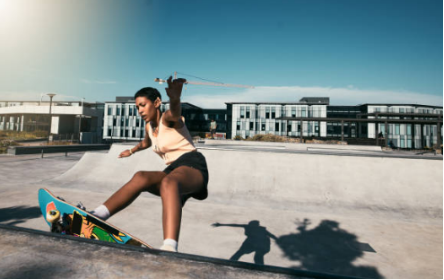
Choosing a suitable skateboarding venue is crucial. Priority should be given to professional skateboard parks, which are carefully designed with flat and non slip surfaces, equipped with various facilities suitable for different levels of skateboarders, and have corresponding safety management regulations. If sliding on outdoor streets, avoid busy traffic sections, bumpy roads, areas with obstacles, and crowded places. Pay attention to the ground condition of the site and avoid sliding on slippery, rocky or cluttered roads to reduce the risk of falling due to poor road conditions.
Difficulty of Control Actions: Gradually Improve Skills
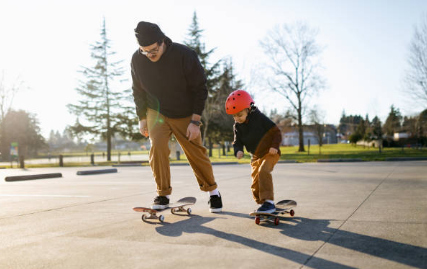
For beginners in skateboarding, do not rush to try difficult movements. We should start learning basic movements such as gliding, turning, braking, etc., and gradually challenge more complex movements after mastering them proficiently. Before attempting new movements, it is important to fully understand the techniques and risks involved. This can be achieved through watching instructional videos, seeking advice from professional skaters, and other methods to ensure adequate preparation. At the same time, it is necessary to control the intensity and duration of practice reasonably based on one’s own physical condition and the state of the day, in order to avoid excessive fatigue leading to movement errors and increasing the risk of injury.
Emergency response: calmly deal with unexpected situations
Self protection during falls
When it is inevitable to fall, stay calm and use the correct self-protection techniques. Try to avoid using your hands to directly support the ground, as this can easily lead to wrist injuries. You can try rolling along with the flow, dispersing the impact force through body rolling, and reducing the degree of local injury. If unable to roll, try to land on the side of the body, such as the thighs, buttocks, and other areas with more muscles, while bending the arms and legs to cushion the force of the fall.
Measures for handling injuries
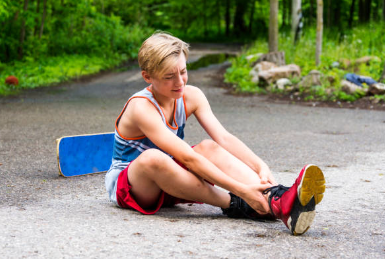
If accidentally injured, timely and correct handling should be carried out. For minor abrasions, the wound should be immediately rinsed with clean water to remove dirt and impurities from the surface, and then disinfected with iodine or other disinfectants to keep the wound clean and dry and prevent infection. If the wound bleeds, clean gauze or towel can be used to press and stop the bleeding, and the pressing time is usually 5-10 minutes. For sprains and strains, cold compress should be applied within 24-48 hours after injury, using ice packs or cold towels to apply to the injured area for 15-20 minutes each time, with an interval of 1-2 hours, to reduce swelling and pain. If the injury is severe, such as a fracture or massive bleeding, the emergency number should be immediately called. During the waiting for rescue, try to keep the injured area stable and avoid secondary injuries.
Skateboarding is full of fun and challenges. By taking good safety precautions, taking effective preventive measures, and mastering emergency response methods, we can minimize the risk of injury while enjoying the freedom and passion brought by skateboarding, and safely bloom our own brilliance on the skateboard.
https://www.aexcept.com/mastering-the-art-of-skateboarding-from-foundational-actions-to-advanced-street-safety/