https://www.aexcept.com/from-nerve-to-muscle-how-extreme-sports-forge-super-coordination/
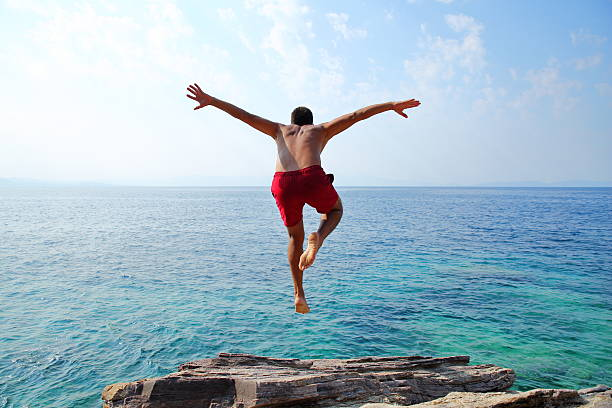
Have you ever wondered why rock climbers who move “like cats” on cliffs, or skateboarders who constantly shift their center of gravity without falling, always seem to have an “extraordinary control” over their bodies?
Their secret isn’t innate talent, but rather a highly efficient communication network from the nervous system to muscle execution , which is constantly strengthened over a long period of time in challenging environments.
Behind every seemingly casual movement in extreme sports lies the foundation of motor neuroscience : the speed of nerve signal transmission, muscle contraction coordination, reflex mechanisms, and real-time feedback from proprioception.
To put it simply: coordination is not about “keeping your hands and feet in place,” but about the brain and body learning to “communicate.”
What is neuromuscular coordination?
Coordination refers to the ability of the brain, nerves, and muscles to work together precisely, quickly, and without delay to execute a movement.
It is not simply muscle strength, but a cyclical feedback system:
The motor cortex of the brain issues commands.
Cerebellum fine-tunes movement rhythm, balance, and pathways.
The neural pathway transmits instructions to the target muscle.
Muscle contraction performs the action
Proprioceptors (in muscles, tendons, and joints) provide real-time feedback on body position, which then returns to the brain to correct movements.
can know where their bodies are in a constantly moving environment without relying on their eyes .
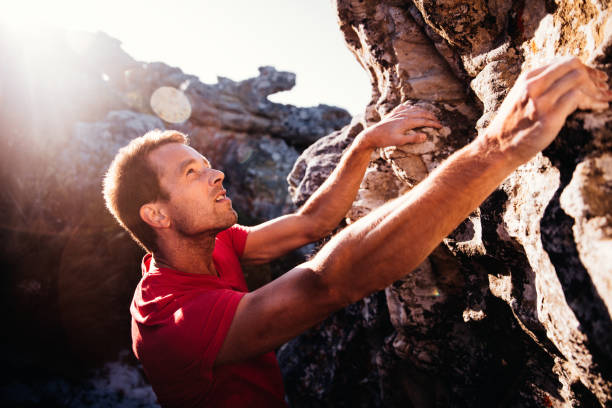
Why do extreme sports improve coordination?
Extreme sports are characterized by: unstable environment, rapid changes, and the need for immediate reaction .
These conditions provide the strongest stimulation for training the neuromuscular system.
1) Enhance proprioception and build a more detailed “body map”.
Imagine this: your feet aren’t on flat ground, but on tiny landing points on a rock face;
your skateboard isn’t stationary, but moving, tilting, and accelerating.
Your body must “update its position in space in real time.”
Studies have shown that balance and surface instability training can significantly enhance proprioceptive sensitivity .
2) Optimize neural pathways and improve reaction speed
Sports like freestyle skiing, surfing, and parkour are “open-ended skills”—the environment is constantly changing.
The brain must continuously predict, correct, and correct again.
Over time, neural synaptic connections become more efficient, and reactions naturally become faster.
3) Promotes brain plasticity
Brain imaging studies show that experienced athletes have more developed cerebellum and motor cortex regions.
In other words, extreme sports not only train the body, but also the brain .
Coordination is not a talent; it can be developed through high-quality, varied, and progressively more challenging training.
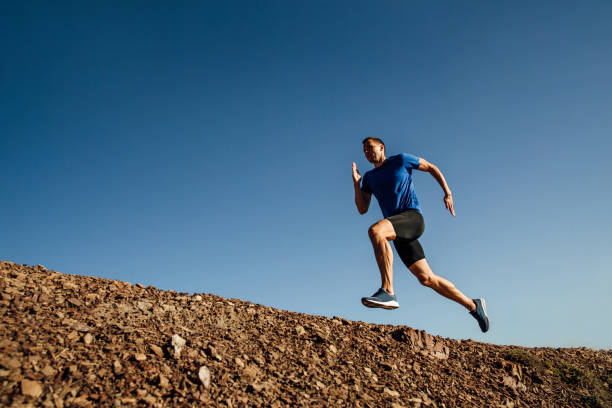
How to safely learn from the training principles of extreme sports (without taking risks)
You don’t need to jump off buildings or tumble over cliffs.
You can train like this:
| Training methods | Purpose | Example |
| Balance training | Activate stabilizing muscle groups | BOSU ball squat and single-leg standing to catch the ball |
| Uncertainty Training | Improve reaction speed | Partner passes the ball in a random direction |
| Compound movements | Training full-body coordination and landing control | Simple parkour landing and rolling exercises |
| Increasing difficulty level by level | Prevent injuries and ensure effective training | From static to dynamic to small-scale leaps |
Keywords: Slow → Stable → Change → Difficult.
Conclusions and key points
Neuromuscular coordination can be trained, it is not innate.
Extreme sports utilize varied and unstable environments to effectively enhance coordination.
The brain, cerebellum, neural pathways, and proprioception will all be “upgraded”.
There’s no need to pursue high-risk actions; safety and gradual progress are more important.
FAQ
Q1: Can extreme sports really improve coordination?
Yes. They can rapidly improve reaction time, balance, and body control.
Q2: How long will it take to see changes?
Usually, you can feel the improvement in stability and your body’s ability to “keep up with instructions” within 4–8 weeks.
Q3: Which sports improve coordination the most?
Rock climbing, skateboarding, parkour, surfing, freestyle skiing, and other sports that involve dynamic balance and full-body coordination.
https://www.aexcept.com/from-nerve-to-muscle-how-extreme-sports-forge-super-coordination/